
About the Artists
John Marc Bimonte
John Marc Bimonte hails from NYC originally, and has made a home in the American Southwest for the past three decades. Like any musician who has put in their time John Marc has been part of myriad of bands, some quite good, but none particularly of note. Although he has been fortunate enough along the way to both play with, and sit at the feet of, David Starr, Kirby Kelly, and Mark Shippy of U.S. Maple fame.
John Marc once he had a long and animated conversation with Ornette Coleman after he descended from the stage following a mind-bending show. No one approached him despite his gracious offer of accessibility. John Marc could not believe everyone was ignoring a chance to speak to this musical legend.
Ornette's graciousness and humility made a huge impression on John Marc that stayed with him for a
long time afterward. Making music that is technically good, earnest, and meaningful are always at
the top of John Marc's musical priorities.
Always interested in both the technical and aesthetic aspects of art and music he has spent the last several years, through much trial and error learning how to capture a dynamic, open sound in a simple studio space. Switching comfortably between engineer and artist hats and drawing on many years of computer geeking John Marc was able to craft an organic-sounding album of contemporary Americana music in The Disenchanted Land.
Playing all instruments and arranging everything but the vocals John Marc set out to make an record true to his finger-style folk and blues roots, and hopefully expanding the genre further with new technologies, recording techniques, novel instrumentation and arrangements.
Luckily when John Marc approached Marianne Potje about working on the album she was very open. Quite quickly with little exposition required Marianne had an intuitive understanding of what John Marc wanted to express, not only musically, but spiritually as well.
Marianne understood the struggles facing the artist, the apostate, and those seeking an authentic existence. And she put her vocals where her heart is, placing all the appropriate feelings behind the notes that make The Disenchanted Land such an emotionally rewarding musical experience.
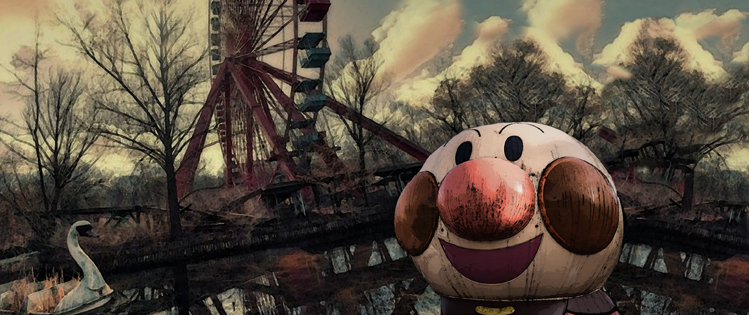
John Marc also created the original album artwork featured in this press kit as well as the CD release.
Marianne Potje
Marianne Potje hails originally from Illinois. The highlights of her college years were DJ'ing at WHPK radio, working at Dr. Wax Records in Hyde Park, and singing in the college choir, together exposing her to almost every type of music she'd ever imagined, and many she had not imagined.
In the 1990s she performed for several years in Chicago with the experimental theater group Doorika, where she met sound designer Celia Bucci and formed their first band, Rover Fido Spot, with J. Niimi of Ashtray Boy on drums. Doorika’s unusual performances culminated in a multi-media production of Gertrude Stein’s
"Doctor Faustus Lights the Lights", with music composed by Jon Langford of The Mekons and The Waco Brothers.
Potje’s performance of Langford’s music caught the attention of producer/engineer Dave Trumfio, leader of the legendary Chicago pop group Pulsars.
Potje joined Pulsars in 1998 playing keyboards and singing backups on a midwestern tour and on their unofficially released LPII.
Still in Chicago, Potje met Brad Eller and began contributing vocals to his electronic music project, Mr. Wet.
In 2001, Potje followed Eller’s move to the San Francisco Bay Area, where they formed Duo Electro, performing live house and electronic dance music. In Berkeley, Potje studied Hindustani classical vocal music with Rita Sahai, and later, a practice called Embodied Voice with singer Sylvi Alli.
For several years Potje seldom performed and wrote only a few songs, but still practiced singing and playing early 20th-century American standards.
When John Marc Bimonte approached her to work on The Disenchanted Land, she accepted without hesitation. "I couldn't have asked for a better project to delve into," Potje says. "I knew John Marc was musical, but I had no idea he'd composed an excellent album that only needed a singer.
The lyrics expressed a lot of what I've gone through myself, personally and spiritually. John Marc gave me the freedom to sing the lyrics however I wanted to, and the melodies basically wrote themselves."